A Complete Guide to Selecting Hardware for Commercial Properties
Most people walk through a commercial building and never give the door hardware a second thought. They push a handle, turn a knob, swipe a badge, and move on with their day. But behind every smooth entry and secure exit is a carefully considered decision that affects safety, compliance, accessibility, and even how a business is perceived.
Getting hardware selection wrong can mean costly replacements, failed inspections, or worse, a security breach. Getting it right means a building that works seamlessly for everyone who uses it, day in and day out.
This guide walks you through everything you need to know to make smart, confident choices.
Understanding the Difference Between Residential and Commercial Hardware
Before diving into specific products, it's worth understanding why commercial hardware exists as its own category entirely.
Residential hardware is designed for light, occasional use. A front door at home might open and close a dozen times a day. A commercial entrance? Easily hundreds of times. That level of traffic demands hardware built to a completely different standard—thicker materials, tighter tolerances, and ratings that reflect real-world abuse.
Commercial hardware is also subject to building codes and ADA (Americans with Disabilities Act) requirements that simply don't apply in residential settings. Ignoring these isn't just an oversight; it can result in fines, lawsuits, or forced renovations.
Key Hardware Categories to Know
Door Knobs and Levers
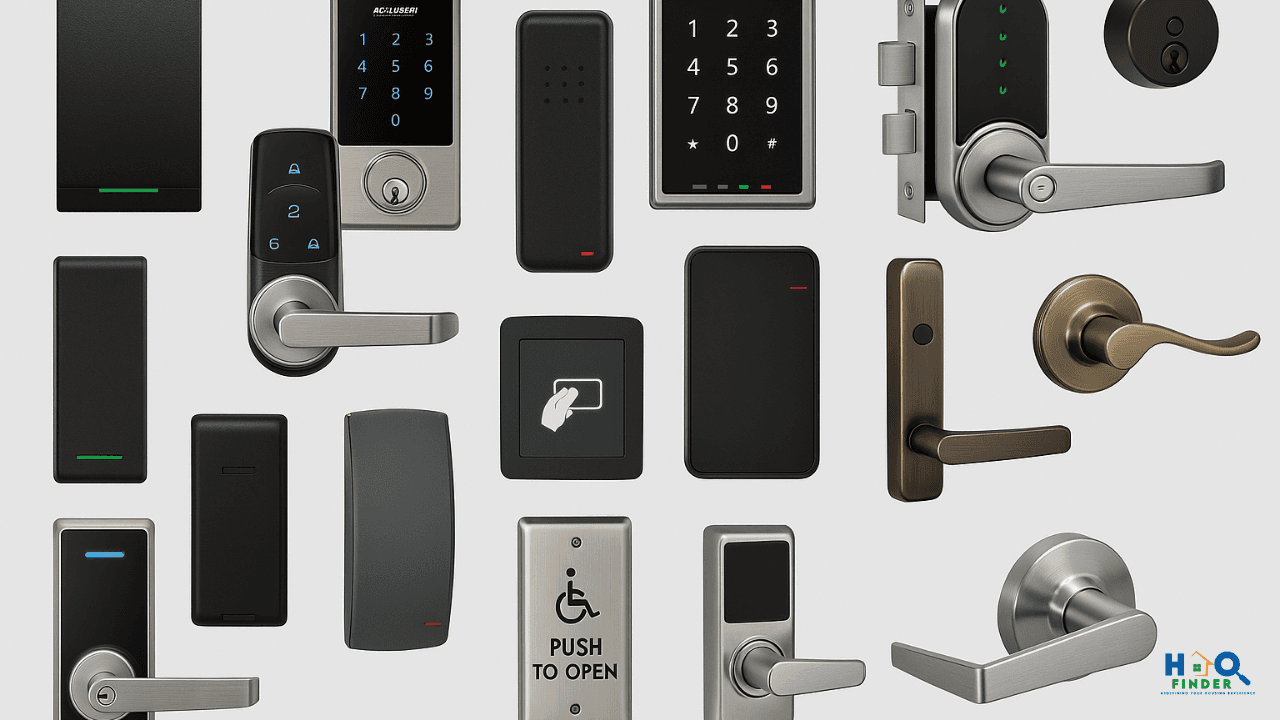
Levers are the go-to for commercial properties, and for good reason. ADA guidelines require that door hardware be operable with a closed fist, meaning round knobs are typically a non-starter in public spaces. Levers meet this requirement and are far more intuitive for a wide range of users, including those with mobility challenges.
When evaluating levers, look for:
- Grade ratings — Commercial hardware is graded by ANSI/BHMA standards. Grade 1 is the highest, designed for heavy-duty use. Grade 2 suits moderate commercial use, and Grade 3 is light-duty (usually residential).
- Finish durability — High-traffic doors need finishes that resist corrosion, scratching, and tarnishing. Satin chrome and oil-rubbed bronze tend to hold up well over time.
- Backset compatibility — Make sure the hardware matches the door's existing prep dimensions.
Exit Devices and Panic Bars
Any door used as a fire exit in a commercial space almost certainly requires a panic bar (also called an exit device or crash bar). These allow occupants to exit quickly in an emergency without needing to operate a traditional handle.
There are a few main types:
- Rim devices — The most common type, mounted on the surface of the door.
- Mortise devices — Built into the door for a more streamlined appearance.
- Vertical rod devices — Used on double doors, engaging the top and bottom of the frame simultaneously.
Always verify local fire codes before selecting an exit device. What's required can vary significantly by occupancy type and jurisdiction.
Door Closers
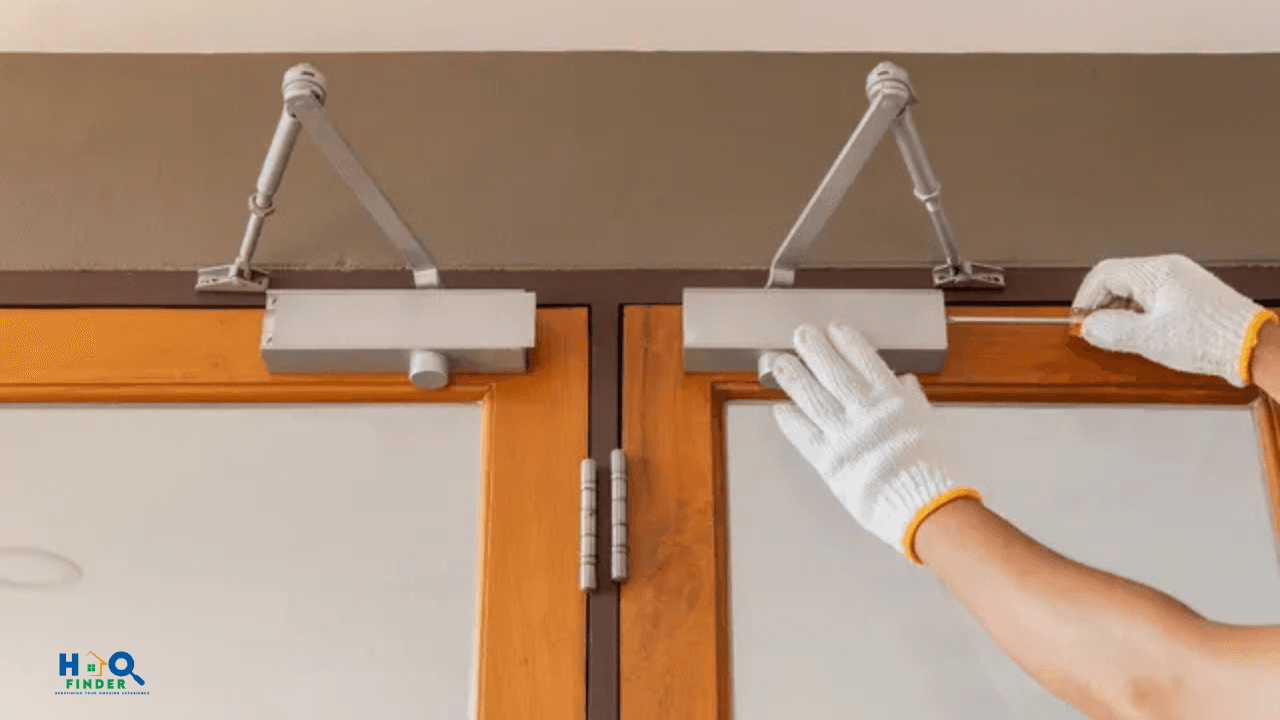
A door closer is one of those unsung heroes you only notice when it's missing or when it's failing. These mechanisms control how a door swings shut, preventing slamming, reducing wear on frames, and maintaining fire and smoke containment in critical areas.
For commercial properties, surface-mounted closers are the most practical option. Look for adjustable closing speed and backcheck features, which prevent the door from swinging open too aggressively (which can damage the door or injure someone).
ADA compliance applies here, too; the force required to open a door with a closer must fall within specific limits, typically no more than 5 lbs for interior doors.
Hinges and Pivots
Heavy commercial doors, particularly steel or solid wood, need hinges rated for their weight. Standard hinges are fine for lightweight interior doors, but for anything substantial, look for heavy-duty ball-bearing hinges, which reduce wear and operate more smoothly over time.
For high-security or high-aesthetics applications, pivot hinges offer an elegant alternative. They mount at the top and bottom of the door rather than along the edge, enabling larger, heavier doors to operate with minimal effort.
Access Control: Where Security Meets Technology
Modern commercial properties increasingly rely on electronic access control, and the hardware choices here are just as important as the mechanical ones.
Keypad and Card Reader Locks
Electronic locks that accept PIN codes or proximity cards give facility managers significant flexibility. They allow access to be granted or revoked instantly, without replacing physical keys. They also create an audit trail—a record of who entered where and when—which can be invaluable for both security and HR purposes.
When selecting these systems, consider:
- Standalone vs. networked — Standalone units are simpler and less expensive, but must be programmed individually. Networked systems can be managed centrally, which is far more efficient at scale.
- Power backup — What happens during a power outage? Good commercial systems include battery backup or a fail-safe/fail-secure mechanism, depending on the security requirements of that door.
- Integration — Can the system connect with your building management software, alarm system, or video surveillance?
Smart Locks and Mobile Credentials
The latest generation of access control uses Bluetooth and mobile credentials, allowing employees to unlock doors with their smartphones. These systems are gaining traction fast, particularly in tech-forward office environments.
They offer real convenience, but they also require a stable IT infrastructure and ongoing software management—factors worth weighing before committing.
Selecting a Reliable Supplier
Even the best hardware specification falls apart if the supply chain isn't dependable. When evaluating suppliers, think about more than just price.
Look for suppliers who carry well-known manufacturer brands with established warranty programs. A good supplier will also be able to provide documentation, product spec sheets, fire ratings, and ADA compliance letters, which you'll often need for inspections or permit applications.
If you're managing a large portfolio of properties, consistency matters. Having a single trusted source for your commercial door hardware needs makes inventory management simpler and ensures you're not mixing incompatible components across buildings.
Turnaround time and stock availability are also worth asking about upfront, particularly for ongoing maintenance needs where delays aren't an option.
Compliance and Code Considerations
This is where a lot of property managers get caught off guard. Commercial hardware isn't just about function; it's about meeting a web of overlapping requirements.
ADA compliance covers not just lever vs. knob, but also mounting heights, clearance space around hardware, and the force required to operate it. Doors in accessible routes must meet all of these criteria without exception.
Fire codes require that certain doors remain self-closing and self-latching at all times. This affects closer selection, latch selection, and in some cases, even which direction a door swings.
Building codes vary by municipality and occupancy type. What's acceptable in a warehouse may be entirely different from what's required in a healthcare facility or school.
Working with a code-knowledgeable supplier or a licensed architect during the specification process can save significant headaches down the road.
Maintenance: The Step Most People Skip
Hardware doesn't maintain itself. A solid maintenance program extends the life of your investment significantly and prevents small issues from becoming expensive ones during renovation.
A basic routine should include:
- Lubricating hinges and closer arms at least once a year, more often in high-use applications
- Testing panic bars and exit devices to ensure they engage and release properly
- Checking door alignment—misaligned doors put undue stress on all associated hardware
- Inspecting electronic components for signs of wear, corrosion, or connectivity issues
- Replacing worn weatherstripping to maintain proper door function and energy efficiency
Documenting maintenance activities also helps when it comes time for inspections or insurance claims.
Conclusion
Selecting hardware for a commercial property is one of those tasks that rewards patience and attention to detail. The right choices—matched to traffic levels, security needs, compliance requirements, and aesthetic goals—create a building that feels effortless to use and expensive to ignore.
Think of it this way: hardware is the handshake between a building and everyone who enters it. When it works well, nobody notices. When it doesn't, everyone does. Taking the time to get it right isn't just good practice; it's a fundamental part of building stewardship that reflects on every organization that calls the space home.

House Hunting, Land Buying & Property Marketing
Smarter with Hao Finder™
Whether you're looking for your next home, investing in land, or marketing real estate listings — Hao Finder™ gives you verified properties, expert insights, and digital tools that simplify your journey.
Call us
+254 715 560 734
+254 118 582674
+973.253.3800
Email us
info@haofinder.com
business@haofinder.com
Location
Delta Corner Towers, Westlands, Nairobi |
471 Mundet Place, Ste. US159850 |
Hillside, New Jersey 07205,
United States