Flat Roof Selection Guide: Comparing Bituminous and Modern Roofing Solutions
The choice of the appropriate flat roofing system in your business house or commercial premises is one of the most important decisions that you will ever make as a property owner or a facility manager. The process may be daunting, given the number of alternatives, including the conventional bituminous roofing and contemporary membrane systems. The stakes are great: the inadequately selected roofing system can cause leakages, energy wastefulness, and expensive repairs that can derail your business activities.
The positive aspect is that one does not need expertise in engineering to know the determinants that were at play in this decision. Through getting to know the bituminous roofing (Bituumenrullkatused) materials that can be used, the various needs of your building, and the long term cost effects, you can easily choose a system that will, according to the needs of your investment, protect it over the decades to come.
The first and most thorough step that many commercial property managers undertake in their research is to explore detailed information on any roofing for flat roof; and this is to know the entire range of solutions that are available to them prior to making the final decision.
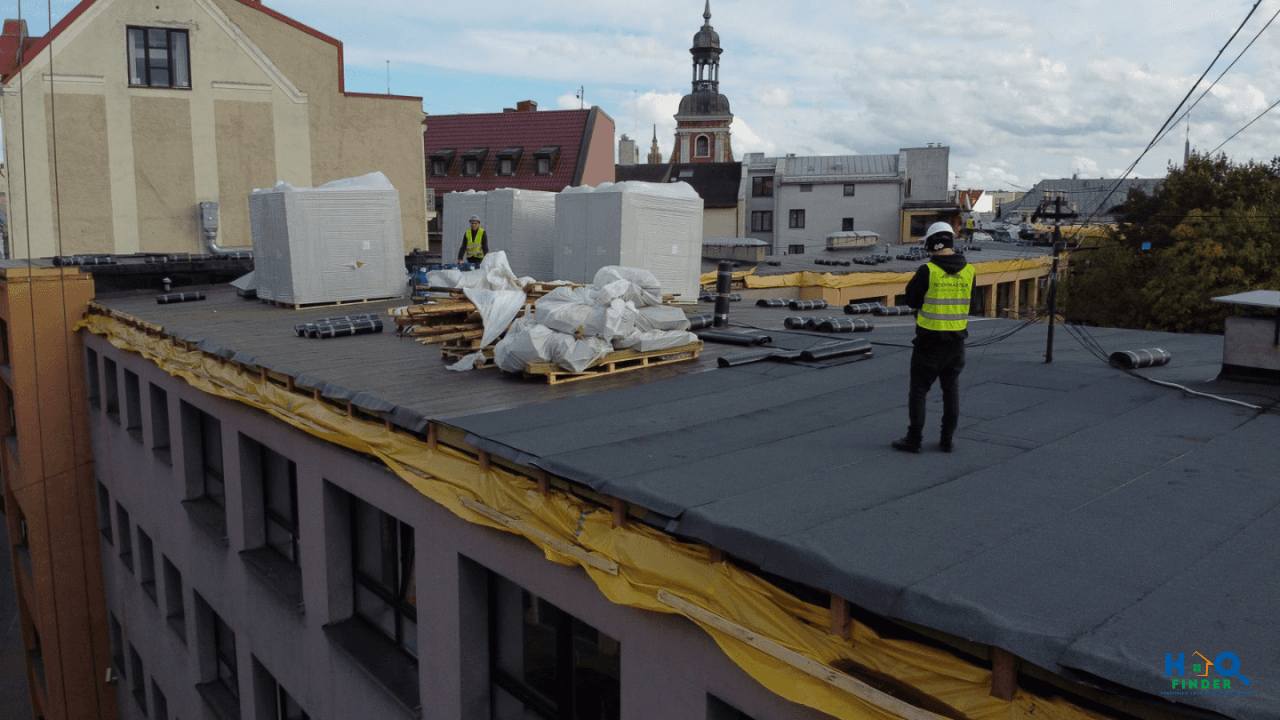
Understanding Flat Roofing Systems: The Basics
Flat roofs have gained much popularity on commercial buildings as they are cheap, easy to install and they allow more space to be utilized. Flat roofs are also more expensive in materials and construction methods compared to pitched residential roofs because proper drainage and weatherproofing of the roof is needed with specialized materials and construction techniques.
A flat roofing system typically consists of several layers:
- Structural Deck: This is constructed of either concrete, wood, or metal and it forms the base of the whole system.
- Insulation Layer: It helps to offer thermal resistance and energy efficiency.
- Waterproofing Membrane: This is the most important layer that ensures the infiltration of water is not possible.
- Protective Coating or Ballast: prevents the UV damage and weather exposure of the membrane.
All these elements are critical in maintaining the entire performance of the system and its durability.

The Role of Bituminous Roofing in Modern Commercial Applications
Bituminous roofing is one of the pillars of the commercial roofing over a hundred years. This is a crude oil product that has proven durability and good waterproof properties that have stood the test of time.
There are two main types of bituminous materials namely built-up roofing (BUR) and modified bituminous membranes.
Compare bituminous roofing options roofing is made by piling up bituminous materials with reinforcing fabrics over and under, making it a highly powerful and elastic membrane. Adjusted bituminous membranes are polymers so as to provide the structures with increased flexibility and weather resistance and thus they are applicable to climatic conditions that usually experience variation of temperature.
The advantages of bituminous roofing include:
- Proven Track Record: Decades of real-world performance data demonstrate reliability.
- Cost-Effectiveness: Generally more affordable than newer membrane systems.
- Flexibility: Can accommodate building movement and thermal expansion without cracking.
- Repairability: Damaged sections can be patched relatively easily.
- Weather Resistance: Excellent performance in various climate conditions.
Bituminous roofing has its limitations though. It is prone to maintenance especially when not maintained regularly, it is also prone to UV damage unless well covered, and installation may be very tedious, especially in built up systems.
Exploring Modern Flat Roofing Alternatives
Although bituminous roofing is still used, new materials have come up which have chosen their own benefits to specific uses.
Single-Ply Membranes
TPO (thermoplastic polyolefin) and EPDM (ethylene propylene diene monomer) single-ply membranes have been winning a lot of market share. Such materials are laid out in a continuous sheet minimizing the amount of seams, and possible points of leakage. The TPO membranes are especially appreciated because of their energy saving properties as they block sun rays thereby minimizing cooling expenses. EPDM is a rubber based product, which is highly durable and flexible.
Liquid-Applied Membranes
The systems are sprayed or rolled on to the roof surface in such a way that they form a continuous monolithic waterproofing coating. Liquid-applied membranes can also be applied to complex geometries on the roof insulation price that have multiple penetrations and membranes may be applied over a pre-existing roofing materials store, thereby saving the disposal costs.
Metal Roofing Systems
The standing seam metal roofs are very durable and it lasts between 40-50 years or more. They are light in weight, energy-saving and they need minimum maintenance. Nevertheless, first costs are normally higher than bituminous or single-ply.
Evaluating Roof Insulation and Energy Efficiency
The owners of commercial buildings have been paying more and more attention to energy efficiency and it is not only due to its environmental value but also its cost effectiveness. Your roofing system insulation layer is an important factor which influences the thermal performance of your building.
Turnkey Roofing Solutions: Simplifying the Process
To a lot of owners of the commercial building, it may be difficult to take care of the several contractors as well as to synchronize various parts of the roofing project. This is where the turnkey roofing solutions will be useful.
Turnkey roofing services provide comprehensive packages that include:
- Professional roof assessment and recommendations
- Material procurement
- Installation by certified contractors
- Quality inspections
- Warranty coverage
- Maintenance planning
Use of a turnkey roofing provider means that you will do away with the hassles of having to deal with various vendors and that your roofing system will be well coordinated so that everything comes together to make your roofing work. This strategy usually leads to the acceleration of the project completion, the quality control and the accountability.
Selecting a Roofing Materials Store and Supplier
The success of your project can largely rely on the material store and supplier that you use in roofing. Good roofing materials store is expected to have:
- Wide Selection: Access to multiple brands and product lines.
- Technical Expertise: Staff who can answer questions and provide recommendations.
- Competitive Pricing: Fair pricing without sacrificing quality.
- Reliable Delivery: Timely delivery of materials to your project site.
- Warranty Support: Assistance with warranty claims and technical support.
Request suppliers of recent projects and ensure they stock products of reputable manufacturers when analyzing the suppliers. No relationship with the supplier may be as valuable as having a good one when problems occur during/after installation.
Key Factors in Choosing Your Flat Roofing System
1. Climate Considerations
The predominant factor is the geographic location that determines the roofing system that is going to be the most effective. Buildings in areas with:
- High UV exposure: Require materials with excellent UV resistance, such as TPO or coated bituminous systems.
- Freeze-thaw cycles: Need flexible materials that can accommodate thermal movement without cracking.
- Heavy rainfall: Require excellent drainage design and waterproofing integrity.
- High winds: Benefit from systems with strong wind resistance ratings.
2. Building Age and Existing Conditions
When replacing an existing roof, the quality of the structure beneath the roof is important. There are systems that are better on existing roofing and those that completely need to be removed. Another factor to consider is existing insulation values they are going to determine what you can and cannot do to your options you can add insulation to existing insulation or you will have to take down and take everything out.
3. Budget Constraints
Roofing budgets typically fall into three categories:
- Economy: Basic bituminous or single-ply systems with minimal insulation.
- Mid-Range: Quality bituminous or TPO systems with standard insulation.
- Premium: High-performance systems with advanced insulation and extended warranties.
It is worth remembering that the cheapest starting price is not necessarily the best one. Think of the overall ownership cost which comprises maintenance, energy efficiency and anticipated lifetime.
4. Maintenance Requirements
Various systems need the different degrees of maintenance:
- Bituminous roofing: It is important to have inspections periodically and also take it off periodically.
- Single-ply membranes: As a rule, they do not need much maintenance but should be inspected frequently in case of puncture.
- Metal roofing: Metal roofing has minimum maintenance requirement; it might require periodic checkups on the fasteners.
5. Aesthetic Preferences
While function is paramount, aesthetics matter too. Your roofing system contributes to your building's overall appearance. Consider:
- Color options: Lighter colors reflect heat and improve energy efficiency.
- Texture: Different materials offer different visual appearances.
- Visibility: Some roofs are visible from adjacent properties or upper floors.
6. Environmental and Sustainability Considerations
Many organizations now prioritize sustainable roofing choices:
- Cool roofs: Reduce urban heat island effect and lower cooling costs.
- Recyclable materials: Some systems can be recycled at end of life.
- Energy efficiency: High-performance insulation reduces operational carbon footprint.
- Green roof compatibility: Some systems support vegetated roof systems.

FAQs about Flat Roof
How long do flat roofing systems typically last?
Lifespan varies by material. Bituminous roofing typically lasts 15-20 years, single-ply membranes 20-30 years, and metal roofing 40-50 years or more. Proper maintenance can extend these timelines significantly.
What's the difference between built-up roofing and modified bituminous roofing?
Built-up roofing consists of multiple layers of bitumen and felt, while modified bituminous uses polymers to enhance flexibility and weather resistance. Modified bituminous typically offers better performance in areas with temperature fluctuations.
Can I install a new roofing system over my existing roof?
Sometimes, yes. Many single-ply and liquid-applied systems can be installed over existing roofing, reducing disposal costs. However, the existing roof must be in adequate condition. A professional assessment is necessary.
What's the most energy-efficient flat roofing option?
TPO membranes with high-quality polyisocyanurate insulation offer excellent energy efficiency. Cool roof coatings can further improve performance by reflecting additional solar radiation.
How often should I have my flat roof inspected?
Professional inspections should occur at least annually, with additional inspections after severe weather events. Regular inspections catch problems early before they become expensive repairs.
What's included in a typical roofing warranty?
Most warranties cover bituminous material defects and workmanship for 10-20 years. Some extended warranties cover labor costs for repairs. Always read warranty terms carefully to understand what's covered.
Conclusion
To select the most effective roofing for flat roof system to cover your commercial building, you need to pay special attention to numerous aspects: climate characteristics, financial opportunities, energy-conservation objectives, building maintenance possibilities, and cost efficiency in the long run. It is up to you to use conventional bituminous materials, the current trend of single-ply membranes, or other innovative options, but the point is to use such a system that will meet your needs and priorities.
You can make a good choice that will secure your investment of a building many decades with the knowledge of the individual properties of various roofing materials, the choice of insulation, and the collaboration with certified contractors. It is important to keep in mind that the cheapest first cost may not be the best one- it is important to take into account the total cost of ownership, including energy efficiency, maintenance, and lifespan.
You must take time to evaluate the special needs of your building, seek the advice of experienced people and you should not hurry in making decisions. The properly selected roofing system will give you peace of mind, security of your possessions and help in the efficiency of the operation of your building. To have all the advice on how to do the correct work on your property, one may also refer to Roofmaster to learn what the professionals recommend to do in regard to the needs of your commercial building.

House Hunting, Land Buying & Property Marketing
Smarter with Hao Finder™
Whether you're looking for your next home, investing in land, or marketing real estate listings — Hao Finder™ gives you verified properties, expert insights, and digital tools that simplify your journey.
Call us
+254 715 560 734
+254 118 582674
+973.253.3800
Email us
info@haofinder.com
business@haofinder.com
Location
Delta Corner Towers, Westlands, Nairobi |
471 Mundet Place, Ste. US159850 |
Hillside, New Jersey 07205,
United States