How to Avoid Overpaying at an Australian Property Auction
Property auctions in Australia can be a game: they are fast, loud, and meant to make your blood rush. That is precisely why auctions are not always safe for buyers—emotions tend to increase, and so do the budgets. The silver lining here is that you can have the simplicity and confidence of shopping in the auction without getting carried away by the "just one more bid" mentality. The trick is to be a professional with a bidding plan and a number that you can walk away with before the auctioneers start shouting numbers.
Defining Overpayment: When Do You Pay Too Much?
Overpayment is not necessarily paying over the agent's quote. The quoted range may be conservative in most markets, and competition may force it to a significantly higher price.
Put simply: you have overpaid when you have paid more than the property is worth to you, taking into account similar sales, your borrowing rates, your risk tolerance, and your next-best alternative. When winning causes you financial stress or disrupts other objectives, the additional money is hardly worth it.
Researching Real Market Value and Comparable Sales
The best defence is to be evidence-based on price at the time of the auction. Begin with sold comparables (not current listings) from the past 30–90 days, preferably in a narrow radius and of comparable size in land, layout, condition, and parking.
When comparing, adjust for differences that actually move the needle, such as renovations, orientation, noise, or an improved school catchment. If you are torn between two values, you should be biased toward the lower value and consider the higher number as the "perfect buyer on a perfect day" price.
If you are pressed for time or shopping in an unknown city, take into account using buyers agents in Australia to help establish accurate value and keep you grounded in reality. A good advocate may also spot pricing schemes and avoid auctions where the campaign has been designed to overheat.
Why You Should Ignore Price Guides and Spot Underquoting
States such as NSW and VIC have rules against underquoting, but price guides may still be trailing market momentum or be positionally packaged. Rather than concentrating on the guide, focus on:
- The last auction outcomes in the suburb (clearance rates and average levels of competition).
- The number of serious buyers attending opens (note repeat faces).
- The vendor's probable reserve price expectations (your study will frequently show the actual figure).
Besides, the selling agent is trained in negotiation. Most real estate agents are experienced at interpreting body language, creating urgency, and keeping things moving in a bid. It does not imply anything wrong is occurring, but just that you must present yourself as ready, not convinced.
Securing Auction Finance and Pre-Approval Before You Bid
Auctions typically result in an unconditional purchase if you win, meaning you must pay a deposit immediately (commonly 10 percent, though it depends). This is why finance must be secured beforehand.
Before bidding, aim to have:
- Good pre-approval (and verify the terms of the lender).
- A good sense of what your repayments will be at prevailing rates plus a margin.
- Money in a form acceptable to the auctioneers (e.g., bank cheque) that can be handed over immediately.
Stamp duty, conveyancing, inspections, strata reports, and immediate repairs are also to be considered. It often happens that a buyer wins an auction but loses money because the all-in cost was not mapped out.
Setting a Strict Maximum Bid and Auction Budget
This is your greatest weapon, and it should be a figure that you memorize prior to the auction. Use it as a platform based on your range of comparable sales, and weigh it against your budget and lifestyle.
A simple approach:
- Determine your fair value range between comps.
- Choose a top price at which you can comfortably bid, not just manage.
- Note it down and treat it as a hard ceiling.
When you are purchasing for investment, your ceiling does not have to be based on the excitement of the day, but on yield, vacancy risk, and probable capital growth. This is where objective investment property advice can save you from paying a premium that could destroy your long-term returns.
Complete Pre-Auction Due Diligence and Inspections
A key cause of people overpaying is that they do not do their due diligence and end up bidding on a property with issues. Check everything before auction day so that you may bid with confidence—or leave early. Common must-dos:
- Construction and termite inspection (or check a previous report meticulously).
- Review of the contract by a solicitor or conveyancer.
- Strata report for apartments/townhouses (find faults, special levies, or low sinking fund balances).
- Council/zoning checks in case you want to make changes in the future.
In most states of Australia, there is no cooling-off period attached to an auction; therefore, do not regard the day of the auction as the beginning of your research. Treat it as the final exam.
Proven Auction Bidding Strategies to Win
A quiet bidding strategy will get you out of the auction fever. You do not require clever tricks—you want discipline. Effective plans to minimize overpaying:
- Bid early to establish your price bracket rather than waiting to be noticed.
- Bid at a steady pace and do not allow the crowd to set the speed.
- Stop and check yourself mentally to make sure you are not over your max.
- When bidding in substantial steps, do not blindly follow—reset to a figure you can justify.
Also, choose to either use odd numbers (e.g., $1,003,000) or round numbers. While confidence is sometimes indicated by odd bids, it is not magic. The actual benefit is remaining intentional.
Managing Emotions and Auction Psychology
Auctions are expected to create urgency: a rush to the phone, a time constraint, social pressure. That is not necessarily bad, but that is precisely how buyers can find themselves paying an increment of an additional $10,000–$50,000 they did not intend to. Utilize one or more circuit breakers:
- Go with a close friend who knows your limit and can rein you in.
- Bid using just one decision-maker (do not bid as a couple).
- Make a rule such as: "I never make two bids in less than one minute."
- Physically move away (two metres or more) if you experience an increase in heart rate.
When you have reached your limit, stop. Don't watch what another bid will do. That last bid is generally the costly one.
Knowing When to Walk Away From a Property Auction
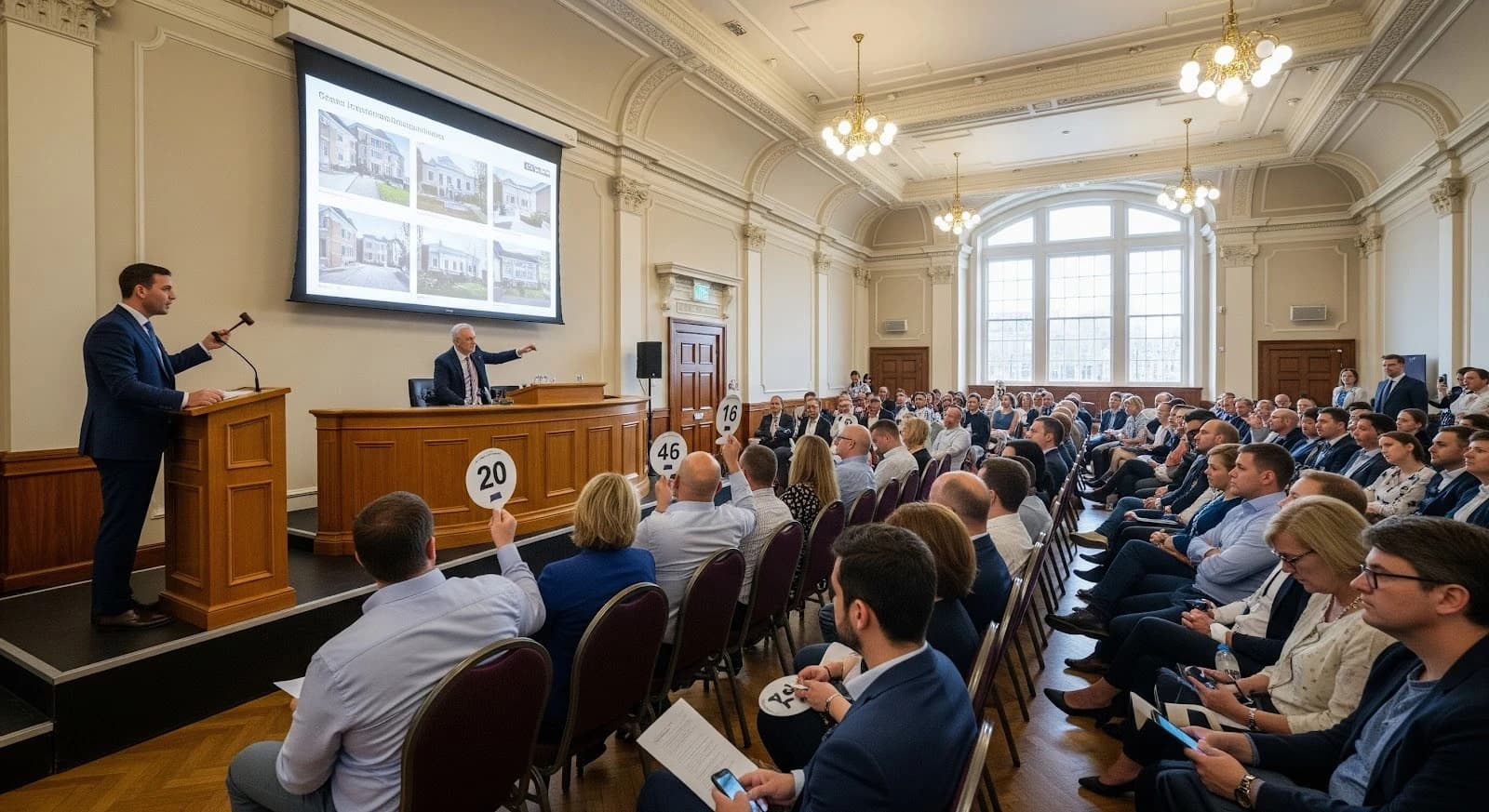
It is painful to walk away, but it can be your biggest monetary gain. When the last price soars beyond your ceiling, it does not mean you were mistaken; it just means that there was another buyer in the market who was eager to buy at a higher price than the property is worth to you.
Keep in mind: you are not going to win every auction. You want to purchase the correct property at a price that still makes sense in six months.
Also, stay focused on the bigger picture: not buying now does not necessarily mean that you will never buy. It usually means that you will purchase at a better level because you remain solvent, flexible, and rational.
Post-Auction Steps: Settlement and Negotiation
In case you lose, ask the agent what the vendor intends to do. There are cases where the property passes in and goes into negotiation, and there are other cases where even the highest bidder cannot bridge the gap.
Should you win, act promptly: be sure the deposit is paid, make sure that the papers are signed properly, and keep your lender and conveyancer informed so settlement is hassle-free.
A clean process is less stressful and can help eliminate expensive last-minute errors.
Conclusion: Mastering the Australian Property Auction
The three things that make the difference between overpaying and success at an Australian property auction are accurate valuation, a hard maximum bid, and the ability to stay calm under pressure. You just have to do your preparation, and the auctions will become less frightening—allowing you to bid with certainty without bidding foolishly.

House Hunting, Land Buying & Property Marketing
Smarter with Hao Finder™
Whether you're looking for your next home, investing in land, or marketing real estate listings — Hao Finder™ gives you verified properties, expert insights, and digital tools that simplify your journey.
What can PropGPTNewhelp with?
Call us
+254 715 560 734
+254 118 582674
+973.253.3800
Email us
info@haofinder.com
business@haofinder.com
Location
Delta Corner Towers, Westlands, Nairobi |
471 Mundet Place, Ste. US159850 |
Hillside, New Jersey 07205,
United States