
Introduction: When Trust in Bricks and Mortar Cracks
Real estate represents the ultimate asset class—tangible, scarce, and foundational to wealth. Yet, its very significance makes it a prime target for history's most audacious fraudsters. While modern homeowners worry about contractor scams, the scale of historical real estate deception is staggering, involving entire communities, reshaping financial systems, and leaving scars that last generations. These aren't just stories of gullible individuals; they are case studies in systemic failure, psychological manipulation, and the perpetual vulnerability of markets to human greed.
This investigation goes beyond summary to analyze the mechanics, psychology, and lasting regulatory impacts of five scams that collectively stole billions and changed real estate forever.

1. The TelexFree Ponzi Scheme: The Digital-First Real Estate Mirage
The Scam: Between 2012 and 2014, TelexFree posed as a VoIP company but operated as a classic Ponzi scheme, paying early investors with money from new recruits. Its connection to real estate was dual: it used fraudulent profits to purchase luxury properties to project legitimacy, and it specifically targeted immigrant communities with promises of guaranteed returns from phantom real estate developments.
The Psychology & Mechanics:
- Affinity Fraud: Exploited trust within tight-knit Brazilian and Dominican communities in the U.S. Promoters were often respected community leaders.
- Asset Laundering: Purchased over $90 million in real estate, including a mansion for the CEO, to create a veneer of immense success and stability.
- The Promise: "Invest $1,000 and earn $8,500 in a year" through a complex matrix that required recruiting others. Real estate was cited as the underlying, profitable asset backing the scheme.
The Catastrophic Impact:
- Financial Loss: Over $1.8 billion lost globally, with the U.S. Securities and Exchange Commission (SEC) calling it one of the largest Ponzi schemes in history.
- Human Toll: Primarily affected immigrant families who lost life savings. As one victim told the Boston Globe, "They didn't just take our money; they took our dream of a home here."
- Lasting Legacy: Accelerated regulatory scrutiny on crypto and multi-level marketing (MLM) models that blur lines with investment fraud. It highlighted how real estate is used as a "proof asset" to legitimize financial crimes.
2. The 1920s Florida Land Boom: Selling Sunshine and Swampland
The Scam: In the mid-1920s, Florida was marketed as a tropical paradise. Speculators used high-pressure sales tactics to sell plots of land sight-unseen. The critical deceit? Many plots were underwater swampland, miles from any development, or even non-existent. "Paper subdivisions" were sold repeatedly using doctored maps.
The Psychology & Mechanics:
- The "Greater Fool" Theory: Buyers didn't believe the land was inherently valuable; they believed they could sell it to someone else for more. This created a classic bubble.
- Sophisticated Marketing: Developers used lavish brochures, free vacation trains to Florida, and celebrity endorsements. One ad famously claimed lots were "just 15 minutes from downtown"—neglecting to mention it was by boat.
- Lack of Due Diligence: There was no centralized title registry. Buyers often purchased "rights" from someone who didn't own the land.
The Catastrophic Impact:
- Financial Loss: Equivalent to tens of billions in today's dollars. The crash wiped out fortunes and bankrupted dozens of banks.
- Infrastructure Collapse: The bust halted all construction, leaving behind ghost subdivisions and half-built hotels. It contributed directly to the banking crises that precipitated the Great Depression.
- Regulatory Legacy: Led to the first modern state land sales regulations, requiring property condition reports, and inspired the creation of the Interstate Land Sales Full Disclosure Act of 1968.
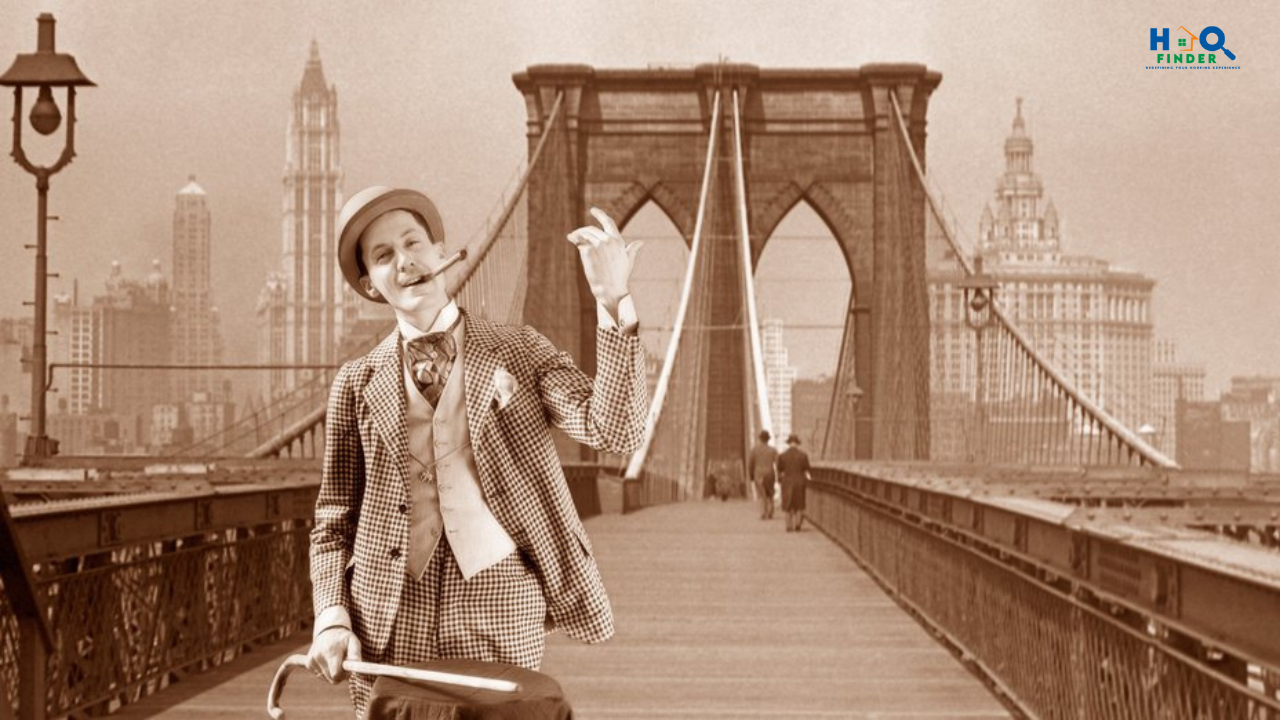
3. "Selling the Brooklyn Bridge": The Archetype of Audacity
The Scam: Con artist George C. Parker's most famous feat in the early 1900s was "selling" public landmarks like the Brooklyn Bridge, the Statue of Liberty, and Grant's Tomb. He created forged deeds and official-looking documents, convincing immigrants and gullible speculators they could charge tolls.
The Psychology & Mechanics:
- Exploiting Newcomers: Targeted new immigrants unfamiliar with American property laws and dazzled by symbols of opportunity.
- Theatrical Credibility: Parker set up fake offices, wore official-looking attire, and even took victims to "their" bridge to survey "their" toll operations.
- The Core Deceit: The scam relied on a fundamental misunderstanding of public vs. private property—a confusion that persists in some land frauds today.
The Impact & Legacy:
- While individual losses were smaller, the scam became cultural shorthand for monumental fraud. It permanently entered the lexicon, warning generations to be skeptical of outrageous claims.
- It underscored the need for public title records and contributed to the professionalization of real estate brokerage, moving transactions away from backroom deals.
4. The Osage Nation Murders & Land Theft: Fraud by Violence
The Scam: In 1920s Oklahoma, after oil was discovered on Osage Nation land, a systemic conspiracy emerged to steal "headrights"—the legal shares of oil royalties granted to each Osage member. This wasn't just paper fraud; it involved murder, forced institutionalization, and coerced marriages.
The Psychology & Mechanics:
- "Guardianship" Abuse: Corrupt local courts declared wealthy Osage members "incompetent" and appointed white "guardians" who systematically drained their accounts and seized their assets.
- Organized Violence: An estimated hundreds of Osage people were murdered in what the FBI later called a "reign of terror" to eliminate heirs and consolidate oil rights. Poisoning and staged shootings were common.
- Document Fraud: Forged wills and deeds were used to transfer ownership after murders.
The Catastrophic Impact:
- Human & Cultural Loss: An incalculable genocide for profit. Families were obliterated, and tribal wealth was stripped.
- Legal Legacy: The scandal led to the Osage Guardianship Act and was a catalyst for the fledgling FBI under J. Edgar Hoover, establishing federal jurisdiction in major crimes on tribal lands. David Grann's book Killers of the Flower Moon revived awareness of this atrocity.
5. The Crisp & Cole $1.3 Billion Mortgage Fraud: The Blueprint for 2008
The Scam: From 2004-2007, real estate agents David Crisp and Carl Cole ran a "property flipping" ring in Bakersfield, California. They used straw buyers with fabricated financial documents to obtain loans for overvalued properties. The scheme relied on appraisers and mortgage brokers who were in on the scam.
The Psychology & Mechanics:
- The "Flip" Cycle: Buy a property for $200,000, get a corrupt appraiser to value it at $500,000, secure a loan for that amount using a straw buyer, pocket the $300,000 difference, and let the property go into foreclosure.
- Exploiting Lax Standards: Pre-2008, lenders were pushing loans through with minimal verification ("liar loans"). This scam was a hyper-aggressive version of industry-wide malpractice.
- Network Corruption: Involved over 200 co-conspirators, including loan officers, escrow agents, and title companies, creating a seamless pipeline of fraud.
The Catastrophic Impact:
- Financial Loss: $1.3 billion in fraudulent loans, devastating local banks and contributing to the systemic risk that caused the 2008 crisis.
- Community Blight: Neighborhoods were filled with foreclosed, abandoned homes, collapsing property values for honest homeowners.
- Regulatory Earthquake: This case, among others, led directly to the Dodd-Frank Wall Street Reform Act, which created the Consumer Financial Protection Bureau (CFPB) and imposed strict mortgage underwriting standards.
The Modern Defense Framework: Lessons Codified
These historical scams provide the DNA for modern fraud. Your protection lies in understanding their patterns.
1. Verification Over Trust (The TelexFree Rule)
- Action: Never invest based on affinity alone. Verify all investment promoters through the SEC's EDGAR database and your state's securities regulator.
- Red Flag: Any "guaranteed" return tied to real estate is likely a security, not a simple property deal, and must be registered.
2. Due Diligence is Non-Negotiable (The Florida Swamp Rule)
- Action: For any land purchase, insist on a current survey, environmental assessment, and physical visit. Verify zoning and utility access with municipal offices, not the seller.
- Red Flag: High-pressure sales, "once-in-a-lifetime" opportunity rhetoric, and reluctance to allow independent verification.
3. Understand Title & Ownership (The Brooklyn Bridge Rule)
- Action: Always purchase title insurance from a reputable company. The title search will reveal if the seller actually owns the asset and if there are liens.
- Red Flag: A seller who cannot readily produce a clear title or who suggests using their "special" title agent.
4. Beware of Systemic Corruption (The Osage Rule)
- Action: In complex or high-value transactions, hire your own independent attorney and financial advisor, not ones recommended by the other party.
- Red Flag: Unexplained complexity, pressure to use a specific network of professionals, or reluctance to put all terms in writing.
5. Scrutinize the Numbers (The Crisp & Cole Rule)
- Action: For mortgages, ensure your debt-to-income ratio is healthy without falsification. Get an independent appraisal. Understand that if you're being pushed into a loan that feels too big, it probably is.
- Red Flag: An appraiser or broker suggesting they can "make the numbers work" by inflating income or value.
Conclusion: The Scaffolding of Trust
Real estate fraud evolves, but its core remains the exploitation of the gap between perception and reality. The billion-dollar scams teach us that fraud is most devastating when it mimics legitimacy—using real contracts, professional accomplices, and cultural truths.
The strongest defense is a combination of healthy skepticism, independent verification, and the understanding that if an offer seems perfectly tailored to your greed or fear, it was likely crafted by an expert manipulator. The regulations that govern today's transactions—title insurance, securities laws, mortgage disclosures—are literally built upon the ruins of these historic scams. To bypass them is to invite history to repeat itself.
As you consider your next real estate move, let these stories be your guide. The greatest tool for safety isn't just a due diligence checklist, but the wisdom to see the long con behind the too-good-to-be-true deal.