Understanding Different Countertop Materials for Your Home
Choosing the Right Countertop Material: Granite, Quartz, Marble & Quartzite Explained
Choosing the right countertop material can feel confusing with so many options available. Granite, quartz, marble, quartzite—each material has different properties and benefits. We visited Columbus Granite, best countertop fabricator in Columbus, OH that we could find, to get clear answers about these popular countertop materials and help you understand which one works best for your home.
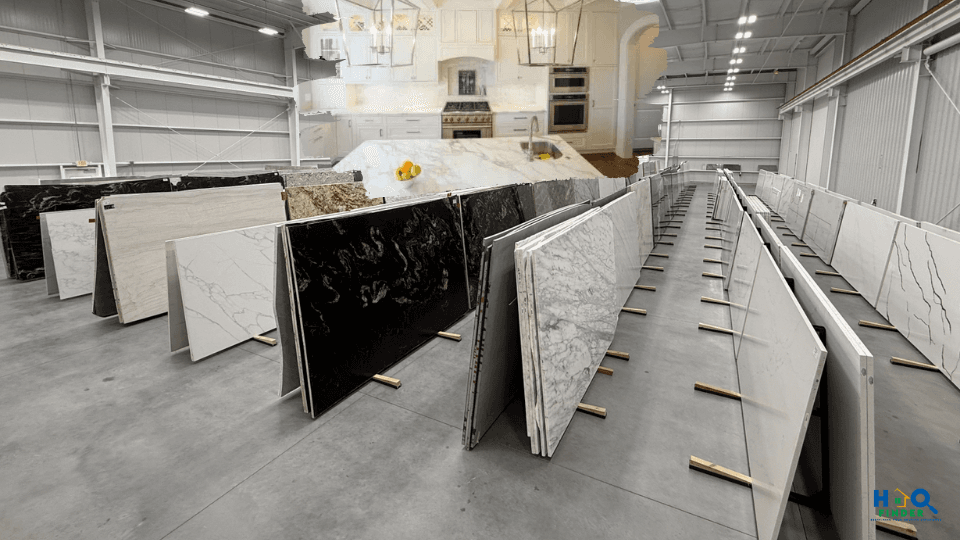
Natural Stone vs. Engineered Stone
The first thing to understand is the fundamental difference between natural and engineered stone countertops. Granite, marble, and quartzite are all natural stones quarried from the ground. These materials come directly from the earth in their natural form.
Quartz countertops are engineered stone. Manufacturers create quartz by combining 92% real quartz crystals with resins and polymers to form a composite material. This makes quartz partly natural and partly manufactured.
Which Materials Work Best for Kitchen Countertops
Not all stone materials perform equally well in kitchens.
- Granite is durable and handles heat, daily cooking, and heavy use.
- Quartzite is extremely hard, durable, and ideal for high-traffic kitchens.
- Marble, while beautiful, is porous and not well-suited for active kitchens due to staining and etching risks.
Sealing Requirements for All Countertop Materials
Every stone countertop needs sealing to protect the surface — including granite, marble, quartzite, and even quartz.
Key maintenance guidelines:
- Use stone-safe cleaners only.
- Avoid abrasive pads, acidic cleaners, and harsh chemicals.
- Never use Windex — its ammonia content opens the pores of the sealer.
With proper cleaning, sealers can last for years without frequent resealing.
Where Countertop Materials Come From
Natural stones come from quarries worldwide. The top exporters are India, Brazil, and Italy. Columbus Granite works with more than 700 global quarries.
Process:
- Blocks are extracted from quarries.
- Blocks are processed into slabs at the quarry.
- Slabs are imported through ports like Charleston.
- Material moves to distributors and fabricators.
Quartz, however, comes from factories—not quarries. Due to tariffs, high-quality quartz now often comes from Italy, India, and the Philippines, with improved graphics that mimic real marble.
Understanding Slab Sizes and Seams
- Natural stone: slab sizes vary based on quarry conditions.
- Quartz: more standardized sizing (e.g., Italian slabs at 128 × 65 inches).
Large kitchen islands may require seams if slabs aren't big enough.
Modern slabs often come book-matched, meaning veining continues naturally across seams for a more seamless look.

What Drives Price Differences Between Materials
For Natural Stone
Price depends on rarity, not quality.
- Level 1: common stones from large deposits → lower cost
- Level 5: rare stones (like exotic quartzite) → higher cost
All levels offer consistent quality.
For Quartz
Pricing depends on:
- Quartz crystal quality
- Color clarity
- Manufacturer production standards
Clear quartz crystals (used by Italian manufacturers) cost more, improving quality and translucence.
Most stones come in 3 cm thickness, and quality remains consistent with reputable suppliers.
Current Color and Design Trends
Trends evolve with home design shifts.
Popular recently:
- Whites
- Grays
- Modern monochromatic looks
Making a comeback:
- Creams
- Light blues
- Gold tones
- Classic materials like New Venetian Gold
Choose colors that match your home's architecture — classic homes fit warmer tones, while contemporary spaces lean toward whites and grays.
Quartzite: The Look of Marble With Better Durability
Quartzite is booming in popularity because:
- It's extremely hard (similar to granite).
- It offers a marble-like appearance.
- It performs much better in active kitchens.
Exotic quartzites often include a fiberglass "ribbon" on slab edges from the extraction process, while quartz slabs are perfectly uniform.
Handling Spills and Stains on Stone Countertops
Staining concerns are common but manageable.
- With a proper sealer, spills like red wine won't stain if cleaned quickly.
- Granite, quartzite, and quartz have low porosity → better stain resistance.
- Marble absorbs more easily and is more vulnerable to stains and etching.
This is why marble works best in bathrooms or lower-traffic areas.
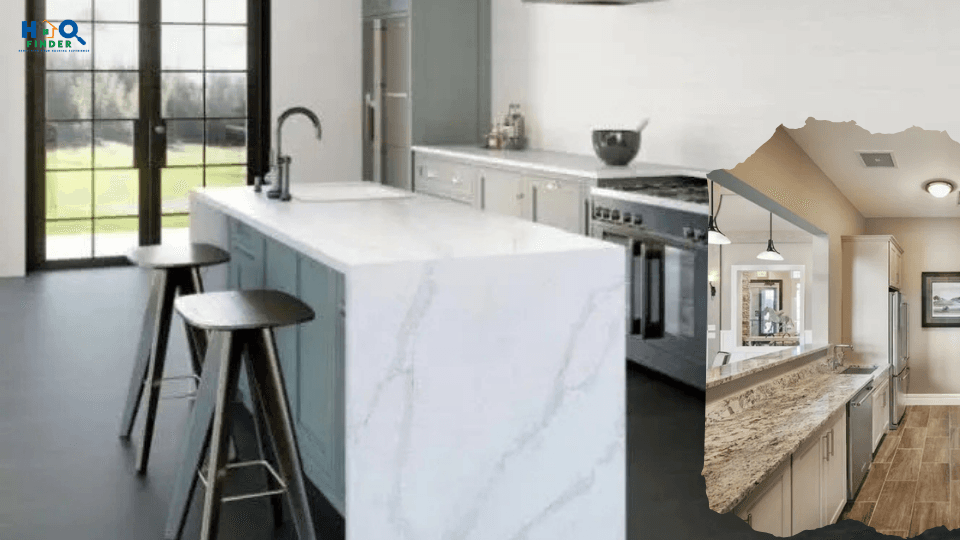
Making Your Material Decision
Choose based on lifestyle and design:
- Active kitchens: granite or quartzite
- Marble lovers who cook: choose quartzite instead
- Low-maintenance preference: engineered quartz
- Desire for unique natural variation: granite or quartzite
- Preference for consistent patterns: quartz
Visiting Columbus Granite allows you to compare slabs in person, understand natural variations, and ask about durability, maintenance, and cost.
With proper maintenance and the right material choice, your countertops will remain add value to your home beautiful and functional for years.

House Hunting, Land Buying & Property Marketing
Smarter with Hao Finder™
Whether you're looking for your next home, investing in land, or marketing real estate listings — Hao Finder™ gives you verified properties, expert insights, and digital tools that simplify your journey.
What can PropGPTNewhelp with?
Call us
+254 715 560 734
+254 118 582674
+973.253.3800
Email us
info@haofinder.com
business@haofinder.com
Location
Delta Corner Towers, Westlands, Nairobi |
471 Mundet Place, Ste. US159850 |
Hillside, New Jersey 07205,
United States