Why Texas Homes Get So Dusty — and What Actually Helps
If you've lived in North Texas for any length of time, you've probably noticed it: a fine layer of dust on the furniture a day after you wiped it down. Dust on the blinds. Dust on the ceiling fan blades. Dust seemingly appearing out of nowhere.
You're not imagining it, and your home isn't unusually dirty. Texas homes accumulate dust faster than homes in most other parts of the country. There are specific reasons for this, and understanding them makes it a lot easier to actually do something about it.

The Three Main Reasons Texas Homes Attract Dust
1. The soil and climate.
North Texas sits on clay-heavy soil that dries out significantly during the summer months. When it's dry and windy, that fine particulate matter becomes airborne and finds its way into homes through gaps around windows, doors, and HVAC systems. The DFW area in particular experiences strong seasonal winds in spring that push dust and pollen through any unsealed opening.
This is different from dust in, say, a humid coastal city, where moisture keeps particles on surfaces rather than suspending them in the air.
2. HVAC systems that recirculate rather than filter.
Most Texas homes run their air conditioning six to eight months of the year. A central HVAC system that's running constantly is also moving air constantly, and if the filter isn't catching fine particles effectively, it's redistributing them throughout the house.
The standard one-inch fiberglass filters that come with most systems capture large debris but let a significant amount of fine dust, pollen, and pet dander pass through. That material circulates with the airflow and settles on every horizontal surface in the home.
3. Tight construction that traps particles inside.
Newer homes built for energy efficiency seal out outside air effectively. That's good for your utility bill. But it also means that whatever gets inside, including dust tracked in from outside, skin cells, fabric fibers from furniture and clothing, and particles from cooking, stays inside and accumulates rather than dissipating.
Older homes with more gaps actually ventilate themselves more, which sounds like it would let dust in, but also lets indoor-generated particles escape.
What Doesn't Work (That People Try Anyway)
Dusting with a dry cloth pushes particles back into the air, where they float and resettle on the same surfaces within a few hours. You can wipe an entire room and have it look dusty again by evening.
Vacuuming with a standard vacuum without a HEPA filter achieves a similar result. The vacuum picks up larger debris from floors but exhausts fine particles back into the room through the motor's output.
Leaving windows open on breezy spring days in Texas is essentially inviting the problem in. A lot of homeowners do this instinctively because it feels like fresh air, but in the DFW area during pollen season, it significantly increases the particulate load inside.
What Actually Makes a Difference
Replace HVAC filters more frequently and with better ones.
In Texas, a filter change every 60 days is a reasonable minimum for a home with no pets. With pets, or during peak pollen season, every 30 to 45 days. Switch to a pleated filter rated MERV 8 or higher. These cost a few dollars more but capture significantly more fine particles.
If anyone in your household has allergies or asthma, a MERV 11 or 13 filter is worth considering. Just verify your system can handle the increased airflow resistance before upgrading, as some older units can't.
Use a damp or microfiber cloth, not a dry one.
Microfiber cloths trap particles in the cloth's fibers rather than pushing them into the air. Damp cloths do the same. Both are significantly more effective than feather dusters or dry paper towels, which are essentially redistribution tools.
Vacuum with a HEPA-filtered vacuum.
HEPA filters capture 99.97% of particles down to 0.3 microns, which covers dust mite allergens, pollen, mold spores, and most fine dust. This matters especially on carpeted floors, which hold more particulate matter than hard floors.
Address the baseboards and ceiling fan blades.
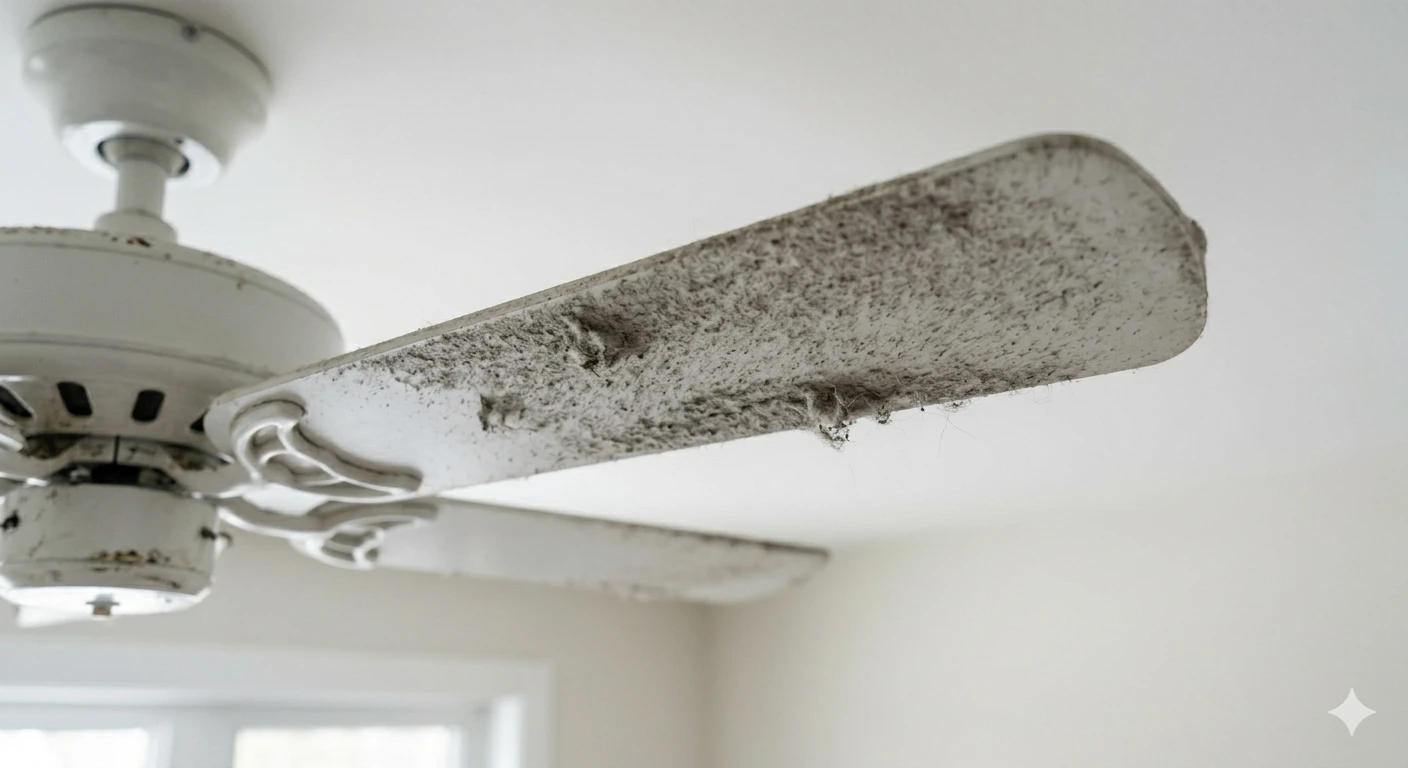
These two areas accumulate more dust than most surfaces and are among the most frequently skipped during quick cleanings. Ceiling fan blades in Texas homes, running nearly year-round, develop a thick buildup that gets redistributed every time the fan runs. Baseboards collect dust that settles in from the air and gets pushed there by foot traffic.
Consider an air purifier in the bedroom.
For bedrooms especially, a standalone HEPA air purifier running overnight removes a meaningful amount of airborne particles from the breathing zone. It won't solve the problem house-wide, but it improves sleep quality for people sensitive to allergens.
The Deeper Clean Texas Homes Need Periodically
Day-to-day maintenance slows the buildup, but it doesn't address the accumulated dust in places that aren't part of a weekly cleaning routine. Upholstered furniture, mattresses, window tracks, light fixtures, and the area behind and beneath large appliances all hold significant amounts of dust and allergens that a regular wipe-down doesn't reach.
Twice a year is a reasonable interval for a more thorough clean that covers these areas. Many DFW homeowners schedule this in spring, when pollen season peaks, and in fall, before the house closes up for cooler months. A professional house cleaning service in the Grapevine area can cover these detail areas systematically and usually completes the job in a fraction of the time it would take to do yourself.
Texas homes get dusty because of dry soil, constant HVAC use, and tight construction that keeps particles circulating indoors. The fixes that actually work are filter upgrades, microfiber cloths, HEPA vacuuming, and attention to high-accumulation areas like ceiling fans and baseboards. A seasonal deep clean handles what daily maintenance can't.
You won't eliminate dust entirely. But with the right approach, you can stop feeling like you're losing a battle with your own home.

House Hunting, Land Buying & Property Marketing
Smarter with Hao Finder™
Whether you're looking for your next home, investing in land, or marketing real estate listings — Hao Finder™ gives you verified properties, expert insights, and digital tools that simplify your journey.
Call us
+254 715 560 734
+254 118 582674
+973.253.3800
Email us
info@haofinder.com
business@haofinder.com
Location
Delta Corner Towers, Westlands, Nairobi |
471 Mundet Place, Ste. US159850 |
Hillside, New Jersey 07205,
United States