Land Transactions: Documents That Do Not Transfer Ownership of Land
One of the most persistent and costly misunderstandings in Kenyan and global real estate is the belief that holding certain documents after paying for land automatically makes someone the legal owner. Buyers hand over their savings, receive a stack of papers, and assume the property is theirs. Months or years later, they may discover that the land belongs to someone else, that it has been sold to multiple people, or that the documents they hold carry no legal weight. Understanding which documents actually transfer ownership and which ones merely support a transaction is essential for anyone investing in land.
Under the Land Registration Act, 2012, ownership of land in Kenya is only legally recognized after registration in the Land Register. No amount of paperwork changes that fundamental rule. This article explains common documents that people mistakenly believe prove ownership, and provides guidance on how to protect your investment.
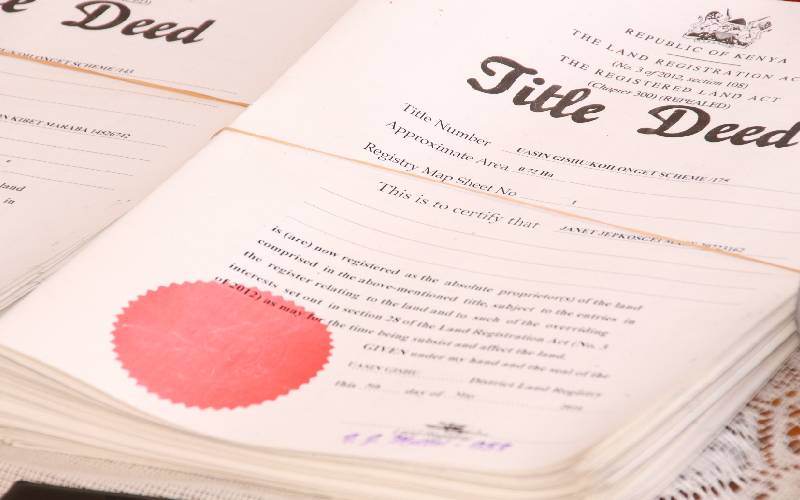
Documents That Do Not Transfer Ownership
Many documents exchanged during land transactions are important steps in the process, but they are not title documents. Holding them does not make you the owner.
1. Sale Agreement
A sale agreement records the intention of the buyer and seller to transfer property at an agreed price. It is a binding contract between the parties, outlining payment terms, completion dates, and obligations. However, ownership only changes after the transfer is registered at the Lands Registry. The agreement is evidence of a transaction, not evidence of ownership.
For a complete understanding of what follows a sale agreement, refer to The Ultimate Guide to Transferring Land Ownership in Kenya which walks through every step from contract to registration.
2. Payment Receipts
Receipts prove that money changed hands. They are useful if disputes arise over whether payment was made, but they do not prove land ownership. A receipt can be genuine while the underlying transaction is fraudulent. Always verify ownership independently rather than relying on payment evidence.
3. Allocation Letter
Allocation letters are issued by government bodies or county governments indicating that land has been offered to an individual or entity. These are common in transactions involving public land. An allocation letter is not a title document. Ownership only arises after the allottee meets all conditions, follows due process, and a title is issued and registered. Many Kenyans have lost money by paying for allocation letters that never translated into actual titles.
Before accepting any allocation, understand the full process outlined in 11 Steps to Follow When Buying Land in Kenya which clarifies where allocation fits in the larger sequence.

4. Survey Plan or Mutation Form
Survey plans and mutation forms show the location, size, and boundaries of land as prepared by a licensed surveyor and approved by the Survey of Kenya. These are technical documents essential for identifying and subdividing land. They are not proof of ownership. A survey plan can be accurate while the person holding it has no legal right to the land.
5. Power of Attorney
A Power of Attorney authorizes someone to act on behalf of the legal owner. It allows the holder to sign documents, manage property, or complete transactions. It does not transfer ownership. The property remains with the original owner unless a separate transfer is registered. Some fraudsters use Powers of Attorney to sell land they do not own, leaving buyers with worthless documents.
6. Family Consent Letters
In family land transactions, especially those involving inheritance or clan land, consent letters from family members may be obtained to confirm agreement. These letters may indicate family approval but do not confer legal ownership. Formal transfer through the Lands Registry is still required.
7. Tenancy Agreements
A tenancy agreement gives the tenant the right to occupy property temporarily, usually in exchange for rent. Ownership remains with the landlord. Tenancy documents are sometimes fraudulently presented as proof of ownership, particularly in disputes over long-term rentals.
How to Verify True Ownership
Since documents like agreements, receipts, and letters do not prove ownership, buyers must conduct proper verification through official channels.
Conduct an Official Land Search
A land search at the Ministry of Lands confirms the registered owner and reveals any encumbrances such as caveats, charges, or restrictions. This can now be done online through the eCitizen portal or Ardhi Sasa platform. The search costs approximately Ksh 500 and is the most reliable way to verify who legally owns the land.
Learn how to navigate the digital system with How to Register Property with the Ministry of Lands and Physical Planning (Ardhi Sasa) - Kenya.
Verify Land Rates and Rent Clearance
Unpaid land rates or land rent can prevent transfer and may indicate disputes. Obtain clearance certificates from the county government and Ministry of Lands before completing any transaction.
Inspect the Physical Land
Documents can be forged. Visiting the site confirms that the land exists as described and is not occupied by others. Check beacons against the survey plan and ask neighbors about ownership history. For critical questions to ask during your visit, see 5 Main Questions You Should Never Fail to Ask During a Site Visit.
Understand the Costs Involved
Knowing the full cost of transfer helps you budget and avoid surprises. Stamp duty alone ranges from 2% to 4% of property value. For a detailed breakdown, read How Much Does It Cost to Process a Title Deed in Kenya? A Step-by-Step Breakdown.
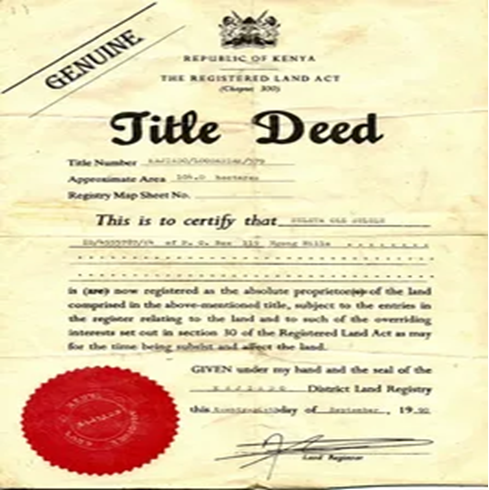
Documents That Actually Prove Ownership
In Kenya, legal ownership is proven by a registered title document. The specific document depends on the type of land:
- Title Deed – For freehold or leasehold land registered under the Registered Land Act or Land Registration Act.
- Certificate of Lease – For leasehold interests, typically in urban areas or on government land.
- Certificate of Title – For land registered under the Registration of Titles Act.
- Green Card – The official register at the Lands Office showing all transactions affecting a parcel.
These documents are issued by the Ministry of Lands after proper registration. They are the only reliable proof of ownership.
Common Pitfalls in Land Transactions
Buying from Unverified Sellers
Fraudsters often pose as owners using fake documents. Always verify the seller's identity against the registered owner shown in an official search. Be especially cautious when dealing with intermediaries or agents who cannot provide direct access to the registered owner.
Relying on Promises of Future Registration
Some sellers promise to process the title after payment. This creates risk because the seller has little incentive to complete transfer once paid. Complete the transfer and obtain the title in your name before releasing full payment.

Ignoring Due Diligence
Skipping steps to save time or money leads to losses. Proper Due Diligence in Real Estate in Kenya includes verifying ownership, checking physical boundaries, confirming planning status, and ensuring all consents are obtained.
Not Involving Professionals
While you can handle some steps yourself, involving a qualified lawyer and licensed surveyor reduces risk. They identify issues you might miss and ensure documents are properly prepared.
Special Considerations for Diaspora Buyers
Kenyans living abroad face additional challenges in land transactions. Distance makes verification harder and increases reliance on intermediaries. Specific requirements apply, including authentication of documents and use of legal representatives. For a complete guide tailored to diaspora buyers, see What Do I Need to Buy Land from the Diaspora? All Steps and Requirements.
Digital Land Records and Title Conversion
Kenya has been digitizing land records through the Ardhi Sasa platform and eCitizen. This improves transparency and reduces fraud. If your title is still in the old format, converting to digital records adds security. Learn about the process in How to Convert Your Title Deed to Digital Land and Property Records in Kenya.
Essential Documents You Need When Buying Land
Before committing to a purchase, ensure you have seen and verified:
- Copy of the title deed or certificate of lease
- Official land search (not older than six months)
- Land rates clearance certificate
- Land rent clearance certificate (for leasehold)
- Sale agreement
- Mutation form and survey plan
- Consent to transfer (where required)
- PIN certificates for buyer and seller
- Identification documents
For a checklist of the most critical items, review 3 Main Documents You Need When Buying Land.
Building a Strong Foundation for First-Time Buyers
If you are new to land buying, the process can seem overwhelming. Start with a solid understanding of the legal framework and typical steps. A Comprehensive Guide to Buying Land in Kenya: Essential Legal Process for Beginners provides the foundation you need to navigate transactions confidently.
Conclusion
Documents such as sale agreements, receipts, allocation letters, survey plans, and consent letters play important roles in land transactions. They record agreements, prove payment, define boundaries, and show family approval. But none of them transfer ownership. Only registration at the Lands Registry, evidenced by a title deed or certificate of lease, makes you the legal owner.
Understanding this distinction protects you from fraud and wasted investment. Always conduct proper due diligence, verify ownership through official channels, and complete registration before assuming the land is yours. Land is one of the most valuable assets you will ever acquire. Treat the process with the seriousness it deserves.

House Hunting, Land Buying & Property Marketing
Smarter with Hao Finder™
Whether you're looking for your next home, investing in land, or marketing real estate listings — Hao Finder™ gives you verified properties, expert insights, and digital tools that simplify your journey.
Call us
+254 715 560 734
+254 118 582674
+973.253.3800
Email us
info@haofinder.com
business@haofinder.com
Location
Delta Corner Towers, Westlands, Nairobi |
471 Mundet Place, Ste. US159850 |
Hillside, New Jersey 07205,
United States